
Microsoft 365 Backup Status Overview
The Microsoft 365 Backup Status Overview report provides a consolidated view of the most recent backup status for your Microsoft 365 objects. It reflects the outcome of the latest backup run for each protected object, helping you quickly understand whether backups are succeeding, failing, or require attention. This report enables administrators to monitor backup health across Microsoft 365 workloads at a glance and identify objects that may need further investigation or corrective action.
The report is generated every 24 hours.
Filter Report Data
The report supports multiple filters to pare down the data that you want to view in the report:
-
System—Select all cluster(s) to include.
-
Source—Select all the sources to include.
-
Policy—Select the backup policy used to backup the objects.
-
Apps—Choose the types of objects to include — Mailbox, OneDrive, SharePoint, Teams, Sites, and Groups.
-
Backup Status—Filter by objects with successful backups or unsuccessful backups.
-
Time Range—Set the time period for your report.
-
If you set a time period, the report displays all objects that had a backup run during the selected time period.
-
If an object is no longer protected, the report will still display data if the object had a backup run during the selected time period.
-
If an object is protected and does not have a backup run during the selected time period, the report does not display the data specific to this object.
-
-
Object—Enter an object name to filter by the name of the object.
Glance Bar
The glance bar provides a summary of the report for the specified period:
-
Total Protection Objects—The total number of protected objects.
-
Success—The total number of protection runs with the status Success.
-
Warning—The total number of protection runs with the status Warning.
-
Failed—The total number of protection runs with the status Failed.
-
Running—The total number of protection runs with the status Running.
-
Canceled—The total number of protection runs with the status Canceled.
-
Skipped—The total number of protection runs with the status Skipped.

Backup Success Rate Overview
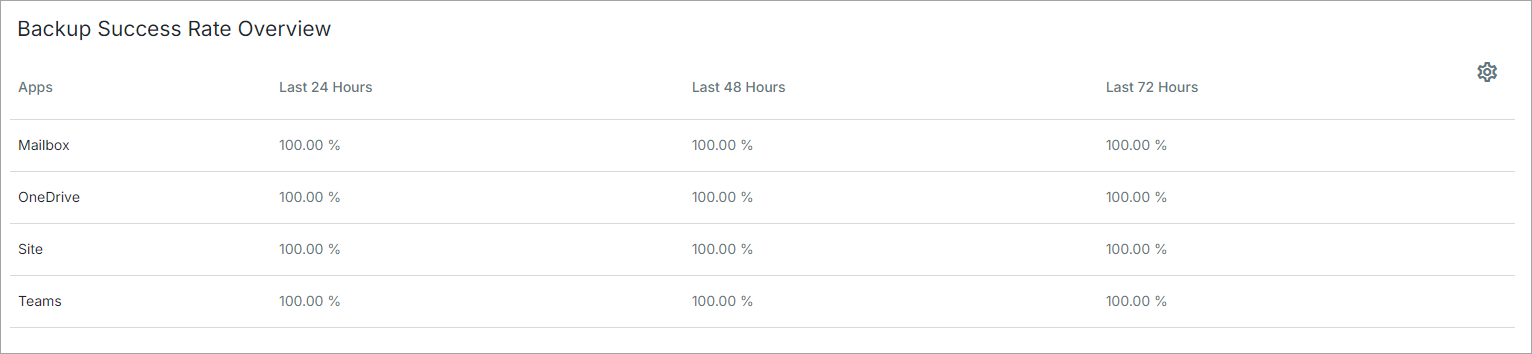
The Backup Success Rate Overview table provides a detailed breakdown of the most recent backup status for Microsoft 365 objects such as Mailbox, OneDrive, Site, and Teams within the selected time range, for example the last 24 hours or the last 7 days.
For each object type, the table displays the following:
-
Total Objects. The total number of protected objects of that type.
-
Status Breakdown. The count and percentage of objects whose latest backup status is categorized as Successful, Warning, Failed, Running, Cancelled, or Skipped.
Only the latest backup attempt for each object within the selected period is evaluated:
-
If the most recent backup completed successfully, the object is counted as Successful, even if earlier backups failed.
-
If the most recent backup failed, the object is counted as Failed, even if earlier backups succeeded.
-
Backups that are still in progress appear as Running.
-
Backups that completed with non‑critical issues appear as Warning.
-
Backups that were stopped before completion appear as Cancelled.
-
Objects that did not have a backup run during the selected period appear as Skipped.
The table helps you quickly assess the current backup health across different Microsoft 365 object types and identify areas that may require attention.
Charts
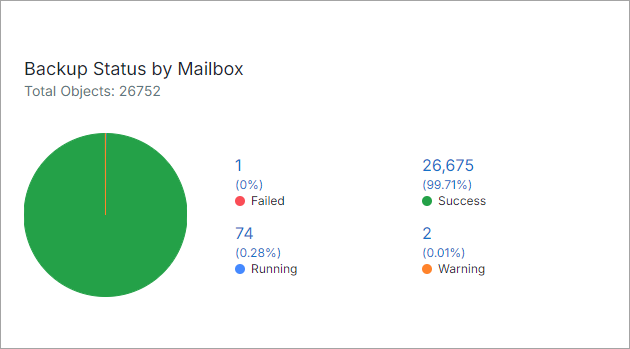
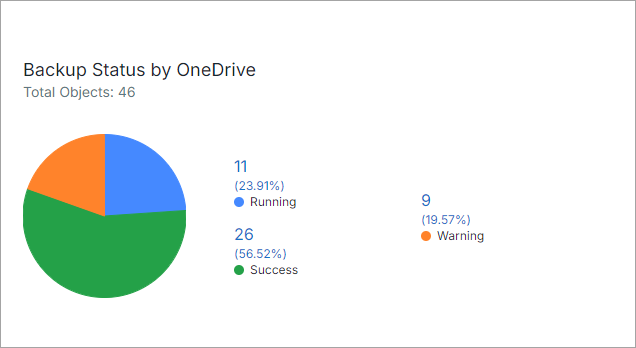
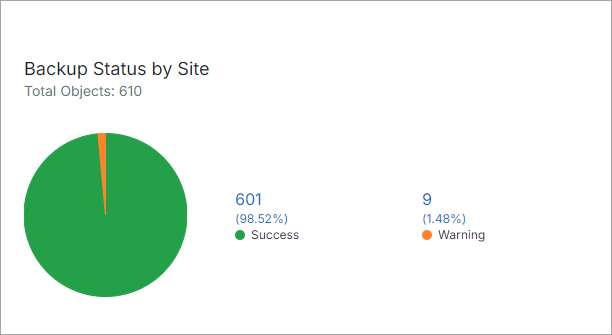
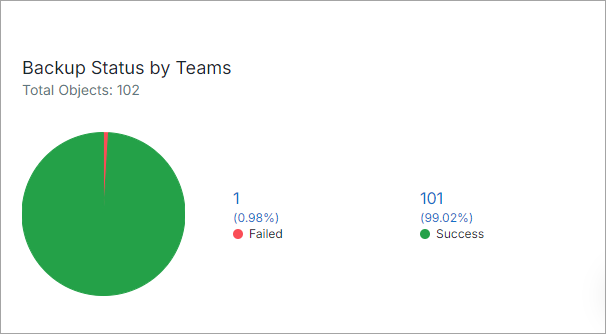
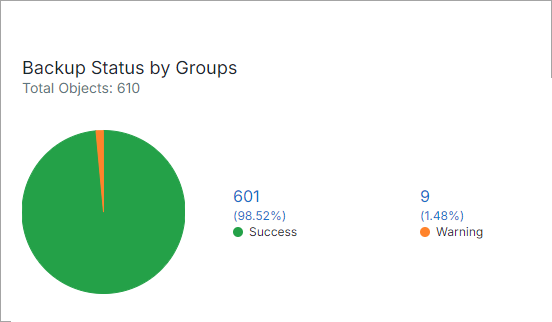
The report includes a backup chart for each of the Microsoft 365 applications:
-
Backup Status by Mailbox
-
Backup Status by OneDrive
-
Backup Status by Site
-
Backup Status by Teams
-
Backup Status by Groups
Report Data
The following table describes the data displayed in the Data table. Use the search bar to filter the data by object name, source, policy, system name, or backup status.
You can add or remove columns. For more information, see Customize Table Columns.
| Column Name | Description |
|---|---|
| Object Name | The name of the protected object. |
| Source | The hostname or IP address of the registered source. |
| System | The name of the cluster on which the object had a protection run. |
| Last Run | The date and time of the last protection run of the object. |
| Message | The failure or warning messages of the protection run. |
